Sunday, December 11, 2022

Why Should that Homeless Guy or that Small Business Guy Pay for the System's Sins?

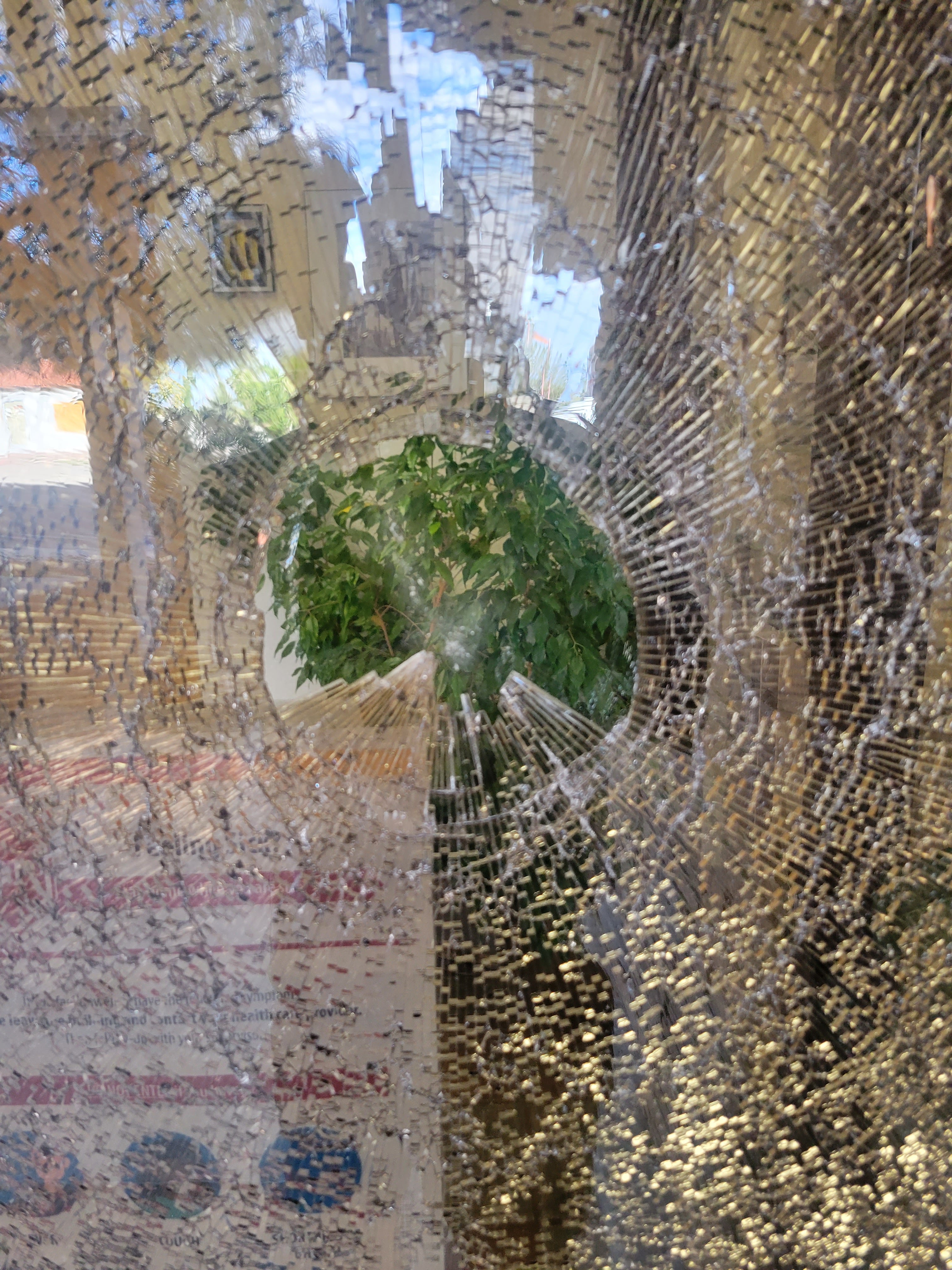
Sunday I visited a Hispanic-owned small business. “Little Dick” had been scrawled on the wall with human excrement. Police still hadn’t showed.

The owner, Carlos, was standing by the wall and an overturned garbage can. He’s a gentle guy, not looking for trouble. Two homeless drug addicts frequently spend the night at this business. They leave behind needles and other trash, and also urine and feces.

I sympathize with them. I’ve had homeless friends, and friends addicted to drugs. Too, homeless folks often do no damage.

Our city sympathizes. The city supports Community of Hope, regularly waives busfares, and its municipal court tries not to let the Detention Center become a modern debtors prison. Carlos sympathizes. He sometimes buys homeless people meals at a nearby restaurant.

I sympathize with Carlos, too.

Homelessness and addiction are societal problems. Our system results in some number of homeless people and addicts. It’s mostly not any one person’s their fault; nor is it Carlos’s fault.

Fairness demands we all help deal with this problem, directly or indirectly. Social justice and a pragmatic desire for community peace demand the same. We shouldn’t jail folks for poverty or being disorganized, and legally we can’t jail them for mental incompetence; but battery, threats, and vandalism should have consequences.

There’s a cost to treating everyone with respect and care. Carlos and other small businessfolk pay that cost in ways most of us prefer not to imagine. He’s no slumlord cheating poor tenants; he doesn’t run a sweatshop; nor is he some huge corporation destroying people’s financial and physical health, then tossing ‘em on the slag heap.

He’s just someone working his butt off to get by and take care of his customers. Why must he spend part of his morning cleaning up urine and feces, and disposing of needles and empty food containers? Why must he be vandalized for asking folks not to sleep at his business? After calling the police, why must he wait and wait and wait?

Whatever your political views, tolerance levels, and faith, consider that someone less decent might have kicked these folks into next week by now. Sounds terrible, but I can understand how it might be tempting under certain circumstances.

Carlos’s uninvited guests show up towards midnight. A special detail could patrol nightly. It would include a police officer or two and a social worker, or at least someone savvy about social services. The detail would focus on problem areas. Before removing folks from private property, the detail could try to engage the trespassers about their situation and what alternatives might be available. Police could then evict trespassers, and either drive them somewhere better, arrest them for a crime, or warn them that returning to the premises will get them arrested. To minimize retaliation, the detail would explain they’re a city patrol, not called by the property owner.

I don’t mean to suggest that this is in any way easy. It’s not the city’s fault, but we need to do something, and the city has the necessary resources. (I’m encouraged that the Community of Hope and the LCFD are implementing services and programs that may help; but I worry about Carlos and others in the meantime.) We need to work together, without letting our differences distract us.

Maybe my idea won’t fly; but let’s figure out what does, and make it happen. Soon.

                                              – 30 – 


[The above column appeared Sunday, 11 De\cember 2022, in the Las Cruces Sun-News, as well as on the newspaper's website and KRWG's website. A related radio commentary will air during the week on KRWG (90.7 FM) and on KTAL (101.5 FM / http://www.lccommunityradio.org/) and be available on both stations’ websites.]

[This was a particularly tough column to write. It is not one where I see something being done wrong by local, state, or federal government and can see and articulate (or think I can) some solution, or at least steps that would be feasible (politically and practically) and very likely effective.

As with everything, broad strokes don’t cut it. Not all homeless folks are like the ones plaguing Carlos. (And they have attacked his property again since I wrote the column) I believe that’s a very small minority. I’ve not spent as much time as I might have in helping, but I have visited and spoken with folks at Camp Hope, and other folks who are homeless. I’ve also talked to them as a part-time municipal judge, trying to discern, sometimes in a video conversation when they’re in jail, who they really are and how to handle their situation.]

Too, feelings churn chaotically, like seawater when waves hit on odd formation of large rocks along a coast. I empathize with the homeless. Any of us could be one. Our system is organized so that some can become obscenely wealthy and others are treated as refuse if they haven’t dollars or useful labor to give the system. People vary tremendously in mental, physical, emotional, and (some would say) spiritual strength and resources. I never forget how fortunate I have been. Even folks addicted to substances aren’t evil, or bad, but primarily weak and/or troubled; and we’re most all addicted to something.

But standing there with Carlos, I empathize, and I’m angry that he’s subjected to this; but I know my comments to that effect will be used by some to feed a political position I don’t share. The problems we’re experiencing are not unique, not some special failing of Las Cruces that can be righted by some political slogan. Panicked, stupid acts like the City’s appointment of a non-active member of the bar to a municipal judgeship, compounded by suing the chief judge for following the law, don’t help. (What’s hard about realizing that if my case is tried by a judge who’s not even allowed to practice law, his conviction of me for drunk driving is worthless, and I’m free as soon as my lawyer points that out to a real judge?)

This is a huge problem that needs hard work and dollars, a lot of patience, and perhaps some creative imagination to deal with. Let’s each contribute what we can of those.]


Sunday, December 4, 2022

Protecting our Friends, the Trees


Las Cruces City Council will consider a tree ordinance.

No, the trees haven’t been speeding, littering, or stealing hubcaps. They’re our best citizens, providing delightful oxygen and thwarting our enemies, those greenhouse gases and other pollutants. They help protect us. They’re not as good at protecting themselves from us.

Why do we need a tree ordinance, what would it do, and what should we do?

Taking the last first, show support by calling and writing your city councilor and urging others to do the same.

Trees work hard for us. Trees in Las Cruces annually remove 45 tons of ozone, sequester 17,800 tons of carbon, provide 3,290 tons of oxygen, and intercept rainwater. That interception helps our soils retain water, resulting in significantly less runoff, flooding, and erosion. For every 10% increase in a city’s tree canopy, the ambient heat declines 2 degrees Fahrenheit. As you’ve probably noticed, in the shade of a tree, a 100 degree day feels like 50-75 degrees. Trees are nice to look at, too! Planting a tree in your front yard can increase your property’s value 30%.

Urban trees even help reduce crime. A team of researchers studying the relationship between tree canopy and crime in and around Baltimore found that a 10% increase in trees roughly equaled a 12% decrease in crime.  A U.S. Forest Service study in the Pacific Northwest confirmed that neighborhoods with homes fronted with street trees experienced lower crime rates – and the results held for crimes generally, not just vandalism and burglary. (It may be that trees alert someone that a house is better cared-for by occupants particularly vigilant about protecting it.)

A tree ordinance would be a great first step to protect existing trees on public property. It deserves enthusiastic buy-in from citizens, councilors, and staff. A tree ordinance can protect, maintain, and increase our tree canopy, keeping both trees and us healthier. Las Cruces also needs to maintain its Community Forester position. Because the excellent Jimmy Zabriskie retires 31 December, urge the City to hire a fully qualified replacement ASAP. (I hope we’ve started already!)

Meanwhile, let’s plant more trees. Not just any trees, but trees that thrive here: trees that can survive our drought and blistering heat, and also the occasional hard freeze. (Such as mesquite and desert willows.)

Fortunately, tree planting is also in the works. Nonprofit Tree NM (“TREE”) has had some success with its NeighborWoods program. The model, Albuquerque NeighborWoods, is a collaboration among TREE, the City, state foresters, neighborhood leaders, and others to provide funding, training, and education for a neighborhood to plant 100 street trees and give 100 trees to homeowners. Each neighborhood provides at least five lead volunteers to help drive the project, and additional volunteers to plant the trees. (The collaboration means there’s no violation of the Anti-Donation Clause.)

TREE has received a grant to extend NeighborWoods to Las Cruces. We might hear before next fall about tree-planting here, maybe in your neighborhood. (You could even volunteer to help plant some.)

In a 28 November work session, the City Council directed legal staff to prepare an ordinance. (Councilor Yvonne Flores asked about the possibility of extending the ordinance to cover businesses and developments. Once the city’s lawyers hash out the legal language, Las Cruces could benefit from doing that too. Only 3% of our trees are on public land.)

Hugging trees is good. Protecting them by ordinance is vital.

                             -- 30 --


[The above column appeared Sunday, 27 November 2022, in the Las Cruces Sun-News, as well as on on the newspaper's website and KRWG's website. A related radio commentary will air during the week on KRWG (90.7 FM) and on KTAL (101.5 FM / http://www.lccommunityradio.org/) and be available on both stations’ websites.]

[The ordinance has not even been drafted yet; but it’s one we need, and should encourage the City Council to move quickly on. I’ll also try to reach the TreeNM folks to get a better sense of when they may be working here, how one might suggest a particular neighborhood to them, the scale of what they’ll be doing here, etc.

I think the ordinance (or a second ordinance that quickly follows) should also cover businesses and developers. That may be more controversial, though it shouldn’t be.

But then, I think state law should prohibit anyone in or after 2023 from planting more than five pecan trees on any property. A crazy thought I’ve had for years. I’m finding that many people in more responsible positions feel the same way, it just ain’t politic to say so. But I ain’t runnin’ for nothin’, so.]

Tree w Ruins           © 2011 Peter Goodman


Sunday, November 27, 2022

Cell-Phone Tower in Mesilla??

“What we have here is a failure to communicate.” (Was Paul Newman watching Mesilla blow up over a proposed cell tower?)

People told me Mesilla Mayor Nora Barraza was pushing a 60-foot Verizon cell-phone tower within Mesilla’s historic zone – and stifling dissent.

Few would want such a tower: unsightly; undermining the historic ambiance Mesilla takes great pains to maintain; noise and light pollution; even possible health issues (Verizon’s insurers refuse to cover health risks); and it would violate decades-old ordinances.

At a recent public meeting, The Mayor cut each speaker’s 3 minutes to 2; abandoned the usual practice of letting folks yield part of their time to someone else; and left passionate residents with carefully-constructed comments in the cold. Information on the tower situation was hard to come by. Officials said, “We can’t talk because of litigation.”

The ordinance outlawing such towers provides, “public property owned or otherwise controlled by the Town may be exempt.” Folks feared The Mayor would use that language to push through Verizon’s tower. Curious, I called Mayor Nora Barraza and asked to meet. I had questions. I also thought that the ordinance created no automatic exemption, but meant a specific project could be exempted if the Town so chose, through its board of trustees following normal procedures.

We had a pleasant talk. The Mayor denied wanting to push the deal through. She provided context: an earlier lawsuit that I’d just heard of wasn’t over. As I later learned, last November the U.S. Magistrate overturned the Trustees’ denial of a Verizon application and remanded the case to the Trustees for further proceedings, which meant Mesilla and Verizon had to talk. The Town has asked Verizon for alternatives.

Mayor Barraza told me that the Board of Trustees would have to decide the matter. The ongoing litigation limited what she could say; but she did not plan to jam this through. (I’m assuming that she never intended to jam this through, not that the uproar caused her to retreat.) She also said the tower would help with public safety.

People had such different views that I wondered how that had happened. Cutting the public’s comment time, which Barraza justified as necessary so everyone could speak, angered folks and seemed to disregard their concerns. Explanations such I’d received)  were apparently not offered to citizens generally. (Likely the litigation complicated communications.) Residents should know that this issue, will recur. Federal law favors Verizon, but takes local factors into account. So watch out – and speak up when necessary.

After interviewing the Mayor, I attended the start of a planning and zoning meeting. Twenty people were there to speak against the tower during public comment. Some had been informed that they could only comment on agenda items. (In city or county meetings, the public addresses agenda items as they come up, and the requirement for speaking during general public comment is to discuss only items not on the agenda.) How things are done matters. I saw citizens being muzzled in a curt, contemptuous manner. That doesn’t enhance community trust. The meeting was rancorous.

After trying to ask a question (with the chair calling for security), I split for the Plaza, to eat chocolate ice cream while sitting on a bench in the sun, listening to kids laugh. Grateful to be exactly where I was.

And I’m grateful to live in a thoughtful community with diverse views expressed by people who care.

                                 – 30 – 


[The above column appeared Sunday, 27 November 2022, in the Las Cruces Sun-News, as well as the newspaper's website and KRWG's website. A related radio commentary will air during the week on KRWG (90.7 FM) and on KTAL (101.5 FM / http://www.lccommunityradio.org/) and be available on both stations’ websites.

[By the way, the U.S. Magistrate’s opinion in Cellco v Mesilla can be found here. Cellco is Verizon. The full case caption reads, CELLCO PARTNERSHIP d/b/a VERIZON WIRELESS, Plaintiff, v. TOWN OF MESILLA, NEW MEXICO and TOWN OF MESILLA BOARD OF TRUSTEES, Defendants. I’ll summarize some points below, but the folks who are really interested in this issue should read the opinion and perhaps even the relevant law, or engage a lawyer.]

[A key point for folks organizing against this also emerges from that decision, although there should also be in minutes from the relevant Mesilla Trustees Meeting: faced with a proposal to put a cell-phone tower out by Highway 28 and Boutz Rd., the trustees apparently voted 4-0 against allowing that. (I gather Mayor Nora Barraza votes only to break a tie.) That should clarify that unless until further developments, the trustees are likely to be reasonably receptive to arguments against the current proposal, should it ever come up for a vote.]

[Basically, Verizon cut a deal with Susan Krueger to build a tower on her property. The Mesilla Planning and Zoning and Board of Trustees each voted against granting permission. Verizon sued.

[A federal law precludes towns, cities, and villages from simply excluding a cell-phone tower because they feel like it. The key impact of the Magistrate’s decision is that he did overturn the Board of Trustees rejection of the cell-phone tower proposal; but he made clear that had different grounds for the local decision been present, the decision might stand. That, plus the law, should tell trustees what grounds might suffice for a decision to stand and what won’t. That’s why everyone should read the decision. (I have not researched what has occurred in the case during the intervening year. The magistrate’s order was issued 29 November 2921.) For example:

(4) denying the application based on “generalized expressions of concern about the aesthetics of property value [sic] violates federal law”; and, (5) denying the application based “on unsubstantiated health concerns articulated by several community members . . . also violates federal law.”

On the other hand, emphasis on Mesilla’s unique character, and thus the enhanced importance of aesthetics and consistency in a town of particular historical significance that has taken great pains to retain evidence of, might be more successful, as, perhaps, would be a less “generalized” evidence of impact on property value. Obviously interested residents (and the town administration) should consult legal counsel on what grounds for opposition (1) are most appropriate under federal law (and town ordinances) and (2) are factually apparent here.]

[I have not researched the Telecommunications Act of 1996 (“TCA) or read other appellate cases construing and interpreting it.]

[I will note that the TCA (47 U.S.C. section 332) includes the following:

(7) Preservation of local zoning authority

(A) General authority

Except as provided in this paragraph, nothing in this chapter shall limit or affect the authority of a State or local government or instrumentality thereof over decisions regarding the placement, construction, and modification of personal wireless service facilities.

(B) Limitations

(i) The regulation of the placement, construction, and modification of personal wireless service facilities by any State or local government or instrumentality thereof-(I) shall not unreasonably discriminate among providers of functionally equivalent services; and (II) shall not prohibit or have the effect of prohibiting the provision of personal wireless services.

(ii) A State or local government or instrumentality thereof shall act on any request for authorization to place, construct, or modify personal wireless service facilities within a reasonable period of time after the request is duly filed with such government or instrumentality, taking into account the nature and scope of such request.

(iii) Any decision by a State or local government or instrumentality thereof to deny a request to place, construct, or modify personal wireless service facilities shall be in writing and supported by substantial evidence contained in a written record.

(iv) No State or local government or instrumentality thereof may regulate the placement, construction, and modification of personal wireless service facilities on the basis of the environmental effects of radio frequency emissions to the extent that such facilities comply with the Commission's regulations concerning such emissions.

(v) Any person adversely affected by any final action or failure to act by a State or local government or any instrumentality thereof that is inconsistent with this subparagraph may, within 30 days after such action or failure to act, commence an action in any court of competent jurisdiction. The court shall hear and decide such action on an expedited basis. Any person adversely affected by an act or failure to act by a State or local government or any instrumentality thereof that is inconsistent with clause (iv) may petition the Commission for relief.


Sunday, November 20, 2022

Celebrating an Excellent and Productive Life -- Kevin McIlvoy's

Snapshots of the writer and his family flash on the screen in a theater where he sometimes read from his work.

The writer’s older son,  recalls falling asleep in a motel room the evening before his paternal grandfather’s funeral, as his father, the writer, sat hunched over a little desk working on the eulogy. When the writer’s son awakened at 2 a.m., the writer was still working, to make the words just right, “to give the performance he felt his father deserved.” Adds the son, “And now, 40 years later, I’m trying to speak at his memorial.”

I’m at a celebration of the life of Kevin McIlvoy, a brilliant and dedicated writer who was friend, colleague, and mentor to people who mattered to him, some of whom matter to me. “Mac” was also a loving husband and father, and one helluva writing teacher.

Mac wrote several fine novels and many poems and short stories. He arose at 5 a.m. to write. Afternoons, he wrote in coffee shops, listening to the conversations around him. He revised constantly. As a friend and colleague said, “He tortured the text until he got it to do what he needed it to.” He worked incessantly and took risks. (Novels narrated by a sixth-grader or an octogenarian stonemason and sometime thief?)

Kevin with our friend Don Kurtz
Mac gave back, too. Despite a writer’s need to hoard his/her time, Mac cared enough to be incredibly responsive to the work of students, not merely mouthing interest but displaying genuine appreciation with numerous perceptive comments and questions. “He truly engaged with students,” one former student said. Mac also edited Puerto del Sol, responding personally to everyone who submitted work. Wednesday mornings at the Munson Center, he taught writing to seniors. Earlier, in Chicago, he convinced the warden to let him teach writing to prisoners. He was such a dedicated father that on one camping trip, after he fell and broke three ribs, he stayed two more days in the wilderness, despite the pain, because his two sons were having so much fun.

Mac was instrumental in growing the NMSU writing program, and two other institutions here flourish because of his efforts. The Wednesday group became Southwest Writers, still meeting at Munson Center fourteen years after Mac left town. (Members have written more than two dozen books!) Mac chaired the Doña Ana Arts Council when it rescued, rehabilitated, and restored the Rio Grande Theater, now a performing arts venue owned by the City of Las Cruces.

He was a teacher in every moment, but also a lifelong student – an example for all of us.

Above all, Mac was a writer who deserves to be remembered and read.

As he said in 2021, “I remind myself that I want to live inside the sentences and not immediately start asking myself, ‘Where is this going?’ but to stay on the ground of the experience that the sentence is making sonically and then to discover by accident where this is going.” He also said, “Being uncertain, being vulnerable, is the best possible thing for me as an artist. I’ve come to believe it’s the best possible thing for anyone who presumes to make art, to place yourself in uncertainties, to be in over your head, to realize that the work is asking you to rise above your limitations.”

Amen, brother. Such words magnify my regret that I never met Mac.

But we have his words, his wonderful books!

                                                               -- 30 --


[The above column appeared Sunday, 20 November 2022, in the Las Cruces Sun-News, as well as on the newspaper's website (or, at least, it will be) and KRWG's website. A related radio commentary will air during the week on KRWG (90.7 FM) and on KTAL (101.5 FM / http://www.lccommunityradio.org/) and be available on both stations’ websites. One obituary of Kevin McIlvoy can be found here.]

[McIlvoy is the author of the novels A Waltz (1981), The Fifth Station (1987), Little Peg (1991), Hyssop (1998), At the Gate of All Wonder (2018) and One Kind Favor (2021, plus a book of short stories, The Complete History of New Mexico (2005), and a collection of short-shorts and prose poems, 57 Octaves Below Middle C (2017). ]

[McIlvoy is the opposite of some writer who sells some books and gets trapped in trying to repeat the same formula, a mystery with recurring characters and scenes, a formula romance, a series of sequels. That, done well, can sell well and please readers who like it; but it’s a death-knell for the creative artist inside, who started all this for reasons deeper than money or fame. As he said, “I’ve always trusted incoherence above coherence.”

Consider the books: One is narrated by a sixth-grader (who barely made it out of 5h) and another by an 85-year-old mason and part-time thief. Little Peg’s protagonist is a woman who’s nearly to the point of being released from a psychiatric treatment center where she’s lived nearly a decade. Scattered through the book are Peg’s short stories, which explain, perhaps without justifying, her behavior.

McIlvoy combined devout Catholicism with an inquiring and creative mind. He named one novel The Fifth Station, after the station of the cross where Simon the Cyrenean briefly helps Jesus carry the cross. It concerns broken promises by three brothers who’ve grown up in an Illinois steel town one of whom lives as a hobo in New Mexico. Reviewers said his hobo friends were particularly vivid. Only when Luke decides to write the story of his youngest brother’s death does he begin regenerating his capacity to love and to trust – and to recover the grace that he (a basketball star as were his brothers) with which he had lived in youth. I’d love to ask McIlvoy over coffee about where helping others, Resurrection, and creative writing intersect in his mind. No chance now.

Hyssop is filled with moments of New Mexico Catholicism, with miracles and saints unquestioned.

In a complex love quadrangle Red loved both his wife Cecilia, 20-years dead now, and her best friend while Cecilia cared deeply for both Red and Red’s best friend, a Catholic priest Red considers a saint. Publisher’s Weekly raved that McIlvoy “has beautifully rendered the soft, Spanish-inflected rhythms of English as it is spoken on the border” in “a farming community where families are rooted for generations” in each other's histories. At the Celebration of Life, Mac’s other son, Colin Allen(?), read the dream sequence that ends Hyssop; it is both strong and sufficiently imaginative that other writers might envy it. (Confession: I wandered down to Coas a few days later and bought that and The Complete History of New Mexico (which Publishers Weekly called a “bizare, engaging collection” of stories that resembles “a series of jazz riffs”).]

[Anyway, this was a guy who enriched not only readers’ lives but the lives of his students, friends, and acquaintances; and who (believing, as he told his wife before they married, that he would not live a long life) lived fully, with creative work, family love, other projects, and plenty of fishing, hiking, tennis, and other recreation. I’m looking forward to the books.]