We love New Mexico, but seeing home
through a new visitor's eyes is always invigorating.
Our 17 year-old niece visited recently
from New England. She landed in El Paso marveling at the unfamiliar
landscape she'd seen as the plane descended. Trans-Mountain Drive
yielded a satisfying mix of cell-phone-camera clicking and
exclamations of “Incredible!” Plus questions about whether
people hiked in the Franklins. It was a particularly showy day, with
late-afternoon sunlight striking peaks wearing bright white
cloud-caps. The road itself felt like a roller-coaster.
We had to go to Albuquerque for the
New Mexico Foundation for Open Government Dixon Awards luncheon and
some meetings Wednesday morning. We transformed the trip into an
adventure, driving up Tuesday by way of White Sands National
Monument, Casa de Sueños
Restaurant in Tularosa, Three Rivers Petroglyphs, and the
Bosque del Apache National Wildlife Refuge.
We don't always brag to visitors about
what we're going to see. The strange, stark beauty of White Sands
can only be enhanced by surprise. “Oh, we're gonna stop at a
monument.” “OK.” Then suddenly that vast expanse of brilliant
whiteness, the sand's cool feel on bare feet, and a bleached earless
lizard posing for a few pictures under a bit of vegetation.
“We'll get some Mexican food then
look at some old
graffiti.” After her vegan calabacitas
enchiladas, sopapillas are a new treat.
Gary,
the volunteer host at Three Rivers, is a genial gent with a big
smile, a friendly dog, and a lot of new knowledge to share. His
introduction enhances our niece's experience. She walks a good ways
up the trail, contemplating images someone chipped into volcanic rock
long ago and feeling a new connection with a long-dead civilization.
Wednesday's
NMFOG luncheon is reassuring, a roomful of people, including some
heavy hitters, focused on transparency in government in New Mexico.
Then
we're on the road again. We reach the Bosque visitors' center just
before closing, disappointed by the absence of water in two ponds
where snow geese and sandhill cranes spend their nights, using the
water as a protective moat between them and hungry coyotes. From
late October to January, they land at sunset, sometimes struggling in
high winds, and awaken at dawn to fly off to forage in nearby fields.
It's
a bit early for the cranes. But there's water at the Boardwalk, so we
take a look.
Our
brief stop becomes one of those afternoons that take control of you.
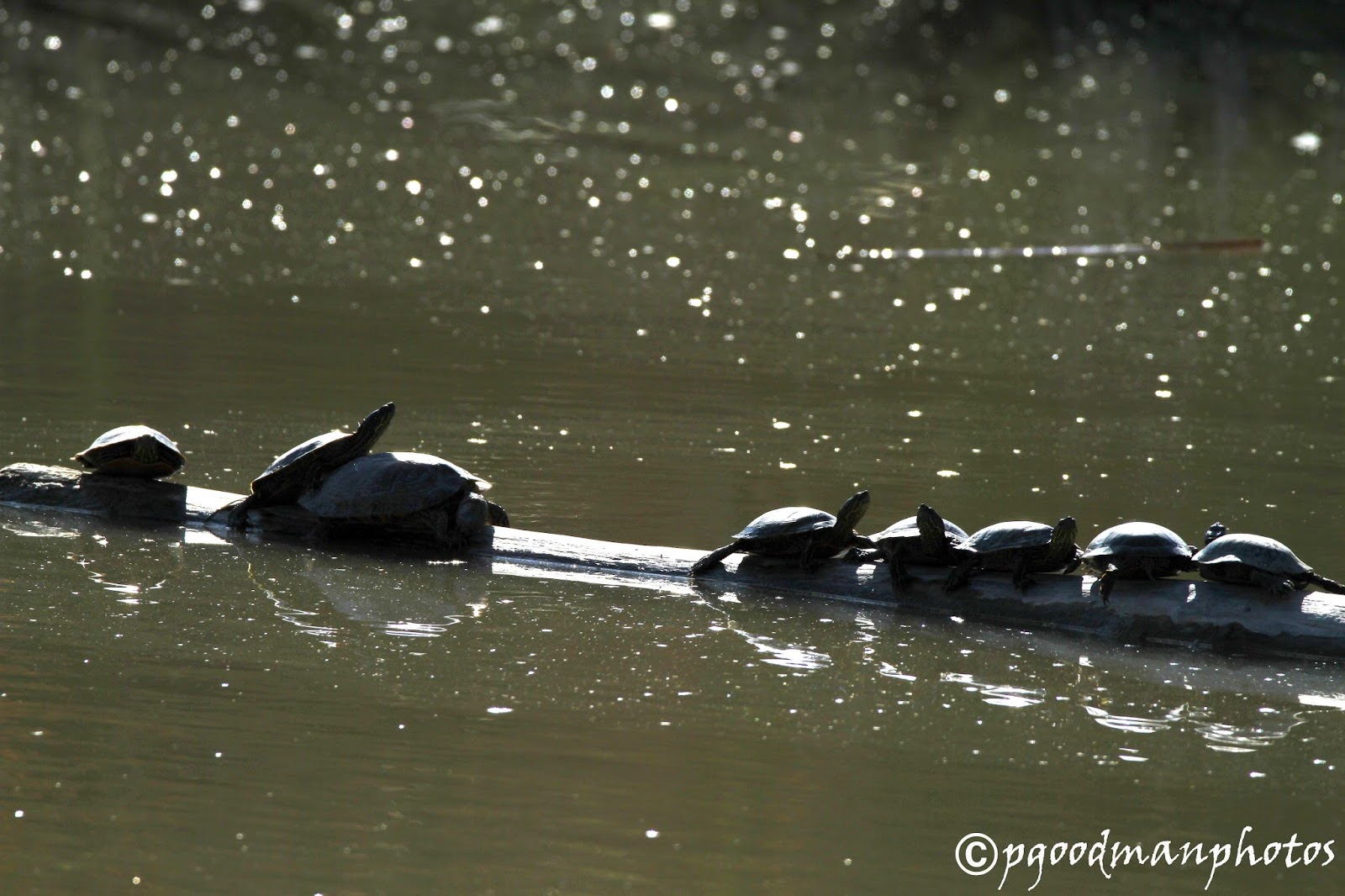
Lines of turtles are sunning
themselves on floating logs. More than
a dozen white pelicans perch in a straggly line on a sand bar, along
with ducks and geese. The pelicans, passing through, are a rare
sight. The light catches them just right, accentuating their
whiteness against the dark blue water, the golden reeds, and the mix
of clouds and blue sky. We're captivated. We watch and photograph
for what I'd call “a very long time” if I even
remembered time
existed. Through the long lens, the pelicans' postures, and the
varied shapes their beaks assume during a yawn, are goofy, but oddly
beautiful.
Then
we hear the unmistakable purr of sandhill cranes. Eleven circle
high overhead, then fly further south.
Our
guest is . . . uhh . . enchanted. The sun sets, and the full moon
watches over us as we hurtle south toward Las Cruces. Watching our
niece come to appreciate our desert home is like introducing beloved
friends to each other and watching them share laughter and secrets.
Before
dawn Thursday morning, as we drive to the airport, New Mexico bids
her farewell with a magnificent lightning show.
-30-
I wanted to add a couple more quick shots of the shapes a pelican's beak can assume during a yawn:
And a couple of images from White Sands National Monument:
The visit even included a chance to record a station ID for our new community radio station, KTAL-LP, 101.5 FM:
 |
| Daisy and Dael at Sunset over Rio Grande River |

 graffiti.” After her vegan calabacitas
enchiladas, sopapillas are a new treat. Gary,
the volunteer host at Three Rivers, is a genial gent with a big
smile, a friendly dog, and a lot of new knowledge to share. His
introduction enhances our niece's experience. She walks a good ways
up the trail, contemplating images someone chipped into volcanic rock
long ago and feeling a new connection with a long-dead civilization.
graffiti.” After her vegan calabacitas
enchiladas, sopapillas are a new treat. Gary,
the volunteer host at Three Rivers, is a genial gent with a big
smile, a friendly dog, and a lot of new knowledge to share. His
introduction enhances our niece's experience. She walks a good ways
up the trail, contemplating images someone chipped into volcanic rock
long ago and feeling a new connection with a long-dead civilization.
 themselves on floating logs. More than
a dozen white pelicans perch in a straggly line on a sand bar, along
with ducks and geese. The pelicans, passing through, are a rare
sight. The light catches them just right, accentuating their
whiteness against the dark blue water, the golden reeds, and the mix
of clouds and blue sky. We're captivated. We watch and photograph
for what I'd call “a very long time” if I even
themselves on floating logs. More than
a dozen white pelicans perch in a straggly line on a sand bar, along
with ducks and geese. The pelicans, passing through, are a rare
sight. The light catches them just right, accentuating their
whiteness against the dark blue water, the golden reeds, and the mix
of clouds and blue sky. We're captivated. We watch and photograph
for what I'd call “a very long time” if I even  remembered time
existed. Through the long lens, the pelicans' postures, and the
varied shapes their beaks assume during a yawn, are goofy, but oddly
beautiful.
remembered time
existed. Through the long lens, the pelicans' postures, and the
varied shapes their beaks assume during a yawn, are goofy, but oddly
beautiful.